TP Service
 About
About
Principal in Strategic Design & Abstraction
 Consulting Service
Navigating the Leap in Product Management
 AI-Era Value:
Unrivaled Expertise
Business / UIUX
 Dieter Rams
10(→3+2) Principles for Good Design
 Theory
A Professional Perspective: the Golden Ratio
 UI Design
Four essntial steps of Micro Interactions
 Behavioral Economics
Utility:The Psychological Wallet and the Complexity of Product Growth
 PdM / CPO
Navigating the Core: The Evolution of a Product Designer
 UX Framework
The Pros and Cons of User Interviews
Art
 Marcel Duchamp
Marcel Duchamp And Modern Art
 Donald Judd
Minimalism and Abstraction
 Storm Thorgerson
Intentional Ambiguity
 Color Theory
The Boundless Potential of Color's Influence
Product
 King Sun & Pipistrello
An Elegant Table Lamp
 Danish Minimalism
Futuristic design that remains timeless.
 PH 4/3 lamp
Object's presence and its harmony with the space.
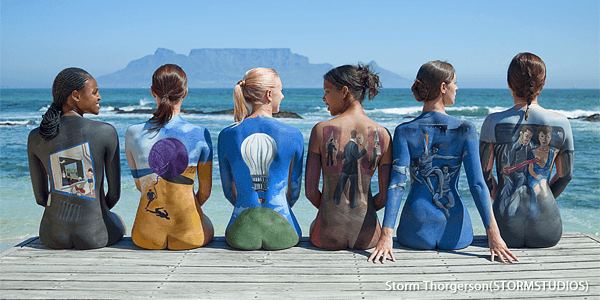
Art & ExpressionMusic SceneST : The Architect of Visual Resonance
Critique - 2025 -
Business models transform with the times. Today, the subscription-based monthly model dominates, offering unlimited music for a modest fee. While we have lost the thrill of picking out a long-awaited record from alphabetized racks, the act of staring intently at the album art on a tablet screen has led me to a renewed appreciation for its brilliance.
Storm Thorgerson
| Dates | 1944/2/28(England) - 2013/4/18 |
| Notable Works | Pink Floyd, The Dark Side of the Moon (1973) Led Zeppelin, Presence (1976), among others |
| Keywords | Genius Loci, Album jacket, Intentional Ambiguity |
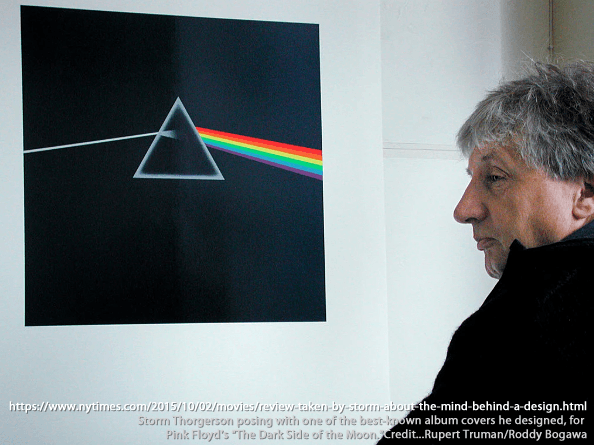
The Dark side of the moon / Pink Floyd - 1973 -
Storm Thorgerson, whom I am introducing here, is legendary for his album covers for the progressive rock giants, Pink Floyd. Their masterpiece, The Dark Side of the Moon, sold over 40 million copies worldwide. Leading the design collective Hipgnosis, Thorgerson crafted countless iconic covers, and this particular success further solidified his global reputation.
Back then, buying a record meant investing a portion of one’s living expenses; therefore, the cover simply had to be 'cool.' The peak of that experience—heading home in high spirits and finally dropping the needle—lay in the silent dialogue with the album art. In many cases, it became a companion for a lifetime.
The Landscape of Cambridgeshire, England

Atom Heart Mother / Pink Floyd -
Thorgerson frequently shot in the Fens, a district of Cambridgeshire. Known for its vast, open plains primarily dedicated to agriculture, this landscape served as the striking backdrop for Pink Floyd’s iconic Atom Heart Mother cover.
As noted in my essay on Donald Judd, landscape and place exert a profound influence on an artist's style—especially through experiences in their formative years.
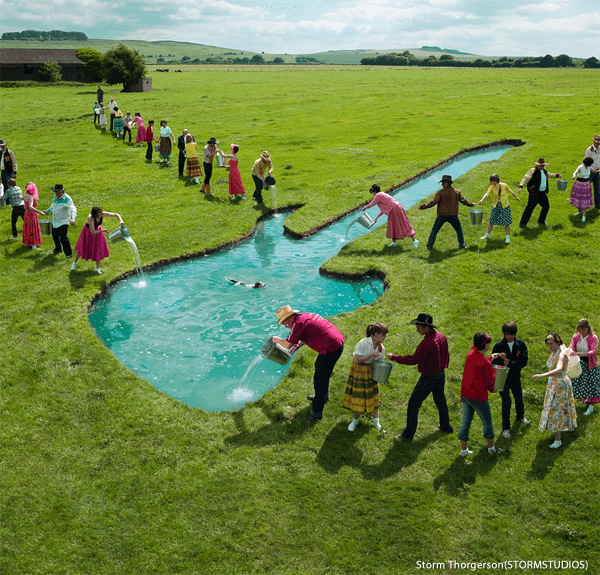
Water Guitar / The Steve Miller Band - Storm Thorgerson
At Cambridge High School, Thorgerson was a classmate of Syd Barrett. There must have been something in that soil that defined their shared artistic sensibility.
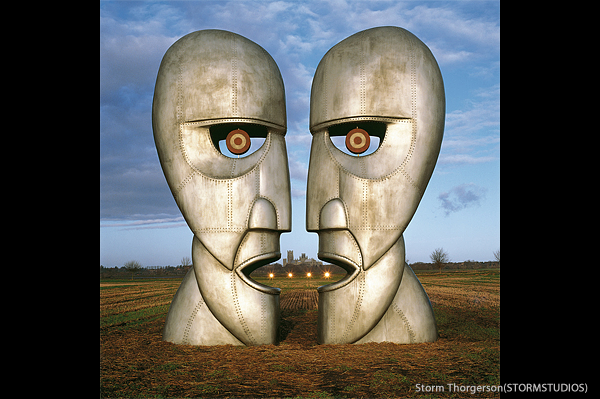
The Division Bell / Pink Floyd -
The music video for High Hopes, filmed across Cambridge, features the lyrical steel guitar of David Gilmour (also from Cambridge) intertwining with Thorgerson’s surreal vision, guiding the viewer into a new dimension of emotion. The recurring imagery of the "horizon" and "green" in the lyrics represents the singular, overarching concept that unites both Pink Floyd and Thorgerson.
Intentional Ambiguity: A Lineage of Artists
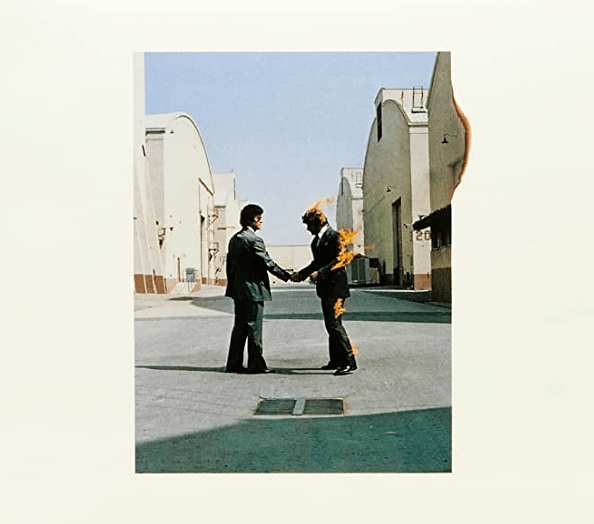
Wish You Were Here / Pink Floyd - 1975 -
Even far from his home ground of Cambridgeshire, Thorgerson’s talent remained unwavering. While the presence of George Hardie, a key member of Hipgnosis, was significant, Thorgerson himself crafted a multitude of unforgettable jacket arts.
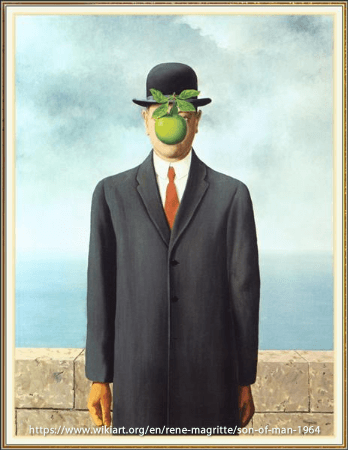
The Son of Man - 1964 -
His surreal style is often compared to Magritte or Dalí, yet it never twists into the extreme distortion of Dalí; rather, in its use of metaphor, it evokes the spirit of Giorgio de Chirico.
What Magritte and Chirico share is a powerful message resonating from everyday objects. Chirico broke new ground in metaphorical expression with the audacious placement of a rubber glove in The Song of Love, while Magritte utilized space and objects to emit messages as if developing a new language.
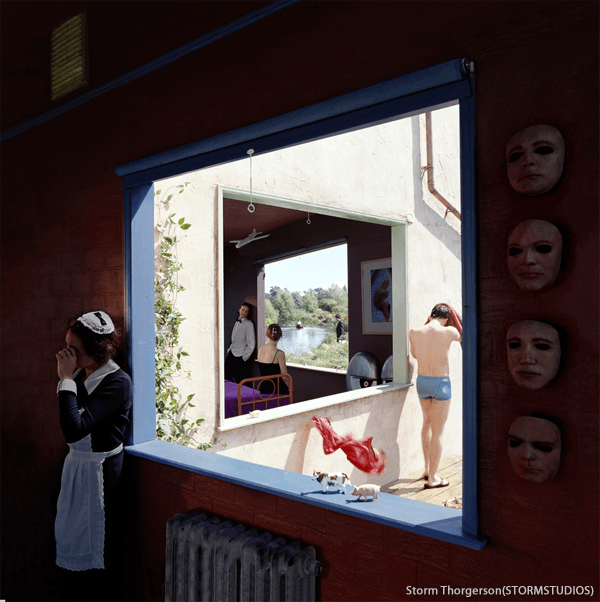
Echoes / Pink Floyd -
Their works are often described as metaphysical art that transcends mere sensation—a quality mirrored in Thorgerson’s wealth of captivating ideas. He reportedly entered the world of art after discovering Magritte through his mother, particularly admiring Magritte’s lack of reliance on pure technique and the way his work evoked a sense of joy.
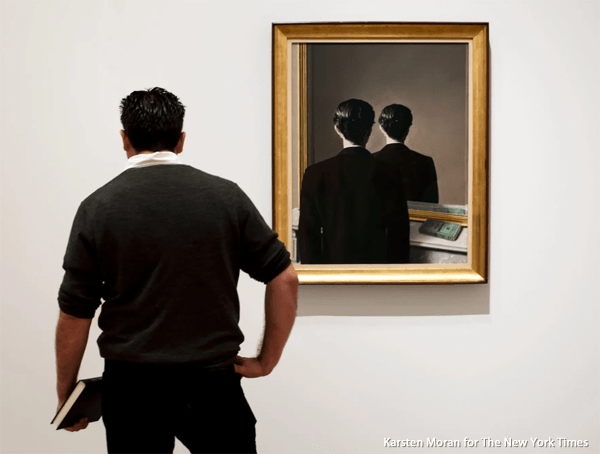
MoMA |
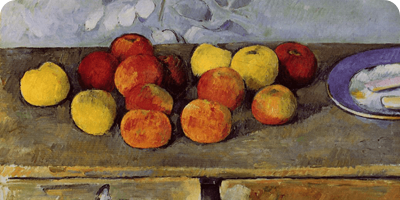
In an interview with Tate, Thorgerson used the term "intentional ambiguity." Chirico’s rubber glove and Magritte’s apple fall precisely into this category. More than mere metaphors, they perhaps represented a sense of "play" by the artists themselves. While these works invite the viewer to drift between the mundane and the extraordinary, the artists themselves may have been "tripping" through their own creations, savoring the process.
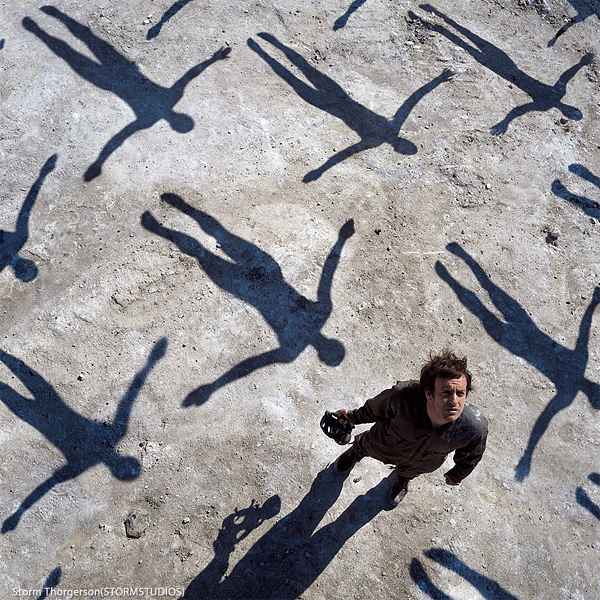
Absolution / Muse - 2003 -
This particular cover was inspired by Magritte’s Golconda, yet Thorgerson remains a more contemporary visionary—unrivaled in his ability to harmonize music with visual imagery.
Epilogue: From Cambridgeshire to the Digital Screen
It is often said that "great albums have great covers." Masterpieces like H.R. Giger’s Brain Salad Surgery or Roger Dean’s iconic artwork for YES and ASIA undoubtedly pushed the excitement of young fans—who invested their hard-earned money—to its absolute peak.
While Thorgerson’s success owed much to the genius of musicians like David Gilmour, their collaboration remains a prime example of a perfect creative match. Retracing his background has left me with a profound desire to journey through Cambridgeshire myself.
It might be a tangent, but as someone whose role involves pursuing superior user experiences, I hold elements like "perception change"—the sudden urge to visit a place previously of no interest—and the "Aha! moment" of discovering an album in the highest regard. While it all begins with exceptional music, this reflection suggests there is still much room to reimagine how we deliver music, whether through smartphone-based experiences or analog-inspired methods.
(Postscript: A few years after writing this, animations were added to several albums, including The Dark Side of the Moon. The animation for 'Dark Side' is simple yet strikingly beautiful.)
Truly great works never cease to provide inspiration.


TP Service
About
Principal in Strategic Design & Abstraction
Consulting Service
Navigating the Leap in Product Management
AI-Era Value:
Unrivaled Expertise
Business / UIUX
Dieter Rams
10(→3+2) Principles for Good Design
Theory
A Professional Perspective: the Golden Ratio
UI Design
Four essntial steps of Micro Interactions
Behavioral Economics
Utility:The Psychological Wallet and the Complexity of Product Growth
PdM / CPO
Navigating the Core: The Evolution of a Product Designer
UX Framework
The Pros and Cons of User Interviews
Art
Marcel Duchamp
Marcel Duchamp And Modern Art
Donald Judd
Minimalism and Abstraction
Storm Thorgerson
Intentional Ambiguity
Color Theory
The Boundless Potential of Color's Influence
Product
King Sun & Pipistrello
An Elegant Table Lamp
Danish Minimalism
Futuristic design that remains timeless.
PH 4/3 lamp
Object's presence and its harmony with the space.